Report 020 · Defense Tech
When your GPS lies: jamming vs. spoofing
The headlines say "GPS jamming and spoofing" as if it's one problem. It's two, and they sit at opposite ends of the electronic-warfare playbook. One denies you your position and lets you know. The other hands you a false position and a full bar of confidence. From someone who operated the jammers, why the quiet one is the one to fear.
GPS interference stopped being a niche military worry a while ago. In 2024 there were more than 430,000 recorded GNSS jamming and spoofing incidents, and by 2025 the count had climbed 193% over 2023. On a typical day somewhere between 700 and 1,350 flights run into it. In one 24-hour stretch, over 1,100 vessels reported interference in the Strait of Hormuz alone. It shows up over the Black Sea, the eastern Mediterranean, the Baltic near Kaliningrad, and the Gulf. This is now ordinary weather in a lot of the world's airspace and sea lanes.
And almost every headline about it makes the same compression, folding two very different attacks into one phrase. I spent my career on the other side of this, as a Counter-IED and electronic-warfare officer. Denying and deceiving the electromagnetic spectrum was the job. So the distinction the coverage flattens is exactly the one that decides how much trouble you're in.
Jamming: denial you can feel
Jamming is the brute-force half. A GPS satellite is a small transmitter about 20,000 kilometers up, and by the time its signal reaches your receiver it is astonishingly weak, weaker than the background noise. That is the whole vulnerability. You do not need to break the signal, only to shout over it. A jammer floods the GPS band with noise, the receiver can no longer pick the satellite whisper out of the roar, and it loses lock. Navigation degrades, freezes, or drops out entirely.
The important thing about jamming is that you know it happened. The little icon goes away. The receiver reports loss of signal, the position goes stale, alarms trip. It is a denial-of-service attack on your position, and like most denial attacks its own bluntness is a warning label. You are now flying or sailing without GPS, which is bad, but you know you are without it, so you fall back to other instruments and other methods. Jamming takes something from you and rings a bell on the way out.
Spoofing: deception you can't
Spoofing is the surgical half, and it is a different beast. Instead of drowning the real signal, the attacker transmits counterfeit satellite signals crafted to look genuine. The receiver locks onto the fakes, runs the same math it always runs, and reports a confident, precise position that is wrong. As Georgia Tech's Anna Raymaker put it in a clear write-up of the maritime problem, "The receiver is not malfunctioning; it has simply been tricked."
That sentence is the whole difference. Jamming produces a known unknown: you have no position and you know it. Spoofing produces an unknown known: you have a position, you trust it, and it is a lie. Your instrument reports full confidence in a falsehood. Nothing trips. No alarm, no missing icon, just a map that quietly disagrees with reality while insisting it doesn't.
The consequences aren't hypothetical. In May 2025 the container ship MSC Antonia was reportedly spoofed near the Red Sea, its plotted position jumping hundreds of miles from where it actually was. The crew, disoriented, ran it aground, which turned into millions in damage and a five-week salvage. Vessel-tracking feeds in these regions now regularly show, in Raymaker's description, ships "suddenly appearing in impossible locations, sometimes far inland or moving in perfect circles." One mariner's summary is hard to improve on: "If you don't have charts and you're being spoofed, you're a little screwed."
Why the quiet one is worse
In electronic warfare we draw a hard line between denial and deception, and it is the line between these two attacks. Denial degrades the enemy's capability, and the enemy usually notices. Deception corrupts the enemy's decisions, and the whole point is that they don't notice. A commander who knows a sensor is down will work around it. A commander who trusts a lying sensor will steer confidently into the rocks. Deception is the higher art precisely because it turns your own systems, and your own trust in them, into the weapon.
Spoofing is that principle pointed at civilian navigation. The failure mode isn't "the GPS stopped working." It is "the GPS worked perfectly and told you a story." That is far harder to train for, because human beings and autopilots alike are built to believe a confident instrument. The scariest number on the panel is not the blank one. It is the wrong one that looks right.
Why you can't just encrypt your way out
The natural question is why we don't simply make the signals tamper-proof. The military uses encrypted GPS codes that are much harder to forge, and that helps against spoofing. But civil GPS is deliberately open and unauthenticated, and rebuilding that around billions of existing receivers is a decade-scale project, not a patch. So the near-term defense is not a better signal, it is not trusting any single signal too much.
That is why the guidance now converging across aviation and shipping is really one idea in different uniforms: cross-check against something that cannot be spoofed from a van by the coast. In March 2026 the FAA reissued its GPS/GNSS Interference Resource Guide, Version 1.1, and its advice runs exactly this way. Pilots are told to report suspected jamming or spoofing to air traffic control as it happens and file a written anomaly report after landing, to favor ground-based approaches after a suspected event, and, notably, that "some spoofing effects can continue even after an aircraft leaves the affected area." The counters are inertial navigation systems that dead-reckon with no outside signal, terrain and radar cross-checks, ground-based radio navigation aids, and for ships the oldest discipline there is, keeping the paper chart and the visual fix alive. None of it is exotic. It is the refusal to let one spoofable input be the single source of truth.
The signal
When you read that a region is seeing "GPS jamming and spoofing," it is worth splitting the phrase in your head, because the two words describe opposite problems. Jamming is loud, honest, and survivable: it takes your position and tells you it's gone. Spoofing is quiet, dishonest, and dangerous: it leaves the needle steady and the story false. The old electronic-warfare instinct is the right civilian one too. Trust no single sensor that a stranger can feed a counterfeit to, and keep a way to check it that lives entirely outside the signal being attacked. In an age where a lie can be beamed straight into your instruments, the most valuable navigation skill left is knowing when not to believe them.
Sources
- Anna Raymaker (Georgia Institute of Technology), "When GPS Lies at Sea: How Electronic Warfare is Threatening Ships and Their Crews," Georgia Tech News Center, March 12, 2026. (Jamming vs. spoofing distinction; verbatim "The receiver is not malfunctioning; it has simply been tricked" and "If you don't have charts and you're being spoofed, you're a little screwed"; the MSC Antonia grounding; ships in "impossible locations … moving in perfect circles"; Strait of Hormuz / Red Sea / Black Sea.)
- Viktoriia Ivannikova (Dublin City University), "Why planes are getting 'lost' due to GPS spoofing and jamming," RTÉ Brainstorm, April 14, 2026. (430,000+ GNSS incidents in 2024; 700–1,350 flights affected per day; 193% increase in 2025 vs. 2023; 1,100+ vessels reporting interference in the Strait of Hormuz in 24 hours; regional hotspots.)
- "FAA Updates GNSS Interference Guide Months After First Release," AVweb, 2026, and NBAA summary of the FAA guide. (FAA GPS/GNSS Interference Resource Guide, Version 1.1, released March 2026; verbatim guidance to report to ATC and file a written anomaly report, favor ground-based approaches, and that "some spoofing effects can continue even after an aircraft leaves the affected area.")
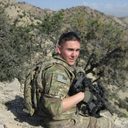
Onur Oncer
U.S. Army combat veteran (Counter-IED / Electronic Warfare), peer-reviewed researcher in microwave spectroscopy, and founder & CEO of Shroombiosis. Consults on laboratory operations, AI, and supplement formulation.